 listicle
Handpicked Artisanal Home Goods Online: 2026 Guide
Table of Contents
- Why Handpicked Artisanal Home Goods Online Are Worth the Search
- What to Look For in Handmade Home Decor Online
- How to Choose Handmade Home Decor That Fits Your Space
- Unique Home Decor Shops: What Sets a Curated Store Apart
- Top Picks: Handpicked Artisanal Home Goods to Shop Now
- Gifts and Housewarming Gifts With Real Character
- Caring for Handmade Goods So They Last
- Frequently Asked Questions
Last Updated: October 21, 2026
Why Handpicked Artisanal Home Goods Online Are Worth the Search
Shopping for handpicked artisanal home goods online means buying pieces chosen by a person, not an algorithm. At Gravel Switch Emporium, we curate every item that reaches our shelves, and we have learned that the difference between a mass-produced vase and a hand-thrown one is usually obvious the moment you hold it.
That is the case for slowing down. Artisanal home goods are objects made or finished by individual makers, often in small batches, where variation between pieces is part of the value rather than a defect. A machine can turn out ten thousand identical candle holders.
Below, we walk through what to look for, how to judge quality from a screen, and which handpicked pieces are worth your attention right now. The Federal Trade Commission's guidance on online shopping and refunds is a useful primer on the protections that apply when you buy from a small retailer you have not used before.
What to Look For in Handmade Home Decor Online
Buying handmade home decor online comes down to three checks: the maker, the materials, and the terms. Get those right and the piece will usually live up to the photograph. Most shoppers stop at the photo; the useful work happens in the listing text and the questions you ask before checkout.
Start with the maker. A listing that names the person who made the piece, or the workshop it came from, tells you more than any lifestyle photo. When we list a piece, we say who made it, because a name is the difference between a product and a story. If a shop cannot or will not name a maker, treat that as a signal rather than a minor omission.
Assessing Craftsmanship, Materials, and Authenticity
Craftsmanship shows up in the details a seller bothers to photograph. Look for close-ups of joins, edges, and finishes. Ask what the piece is made of in plain terms: solid wood or veneer, stoneware or earthenware, cotton or a blend.
Use a short, repeatable checklist rather than a gut feeling. The criteria below are the ones that separate a verifiable handmade piece from a listing that merely uses artisan language.
| What to Verify | Strong Signal | Weak Signal |
|---|---|---|
| Maker identity | Named individual or named workshop with a bio | "Designed by our team" with no person or place |
| Materials | Specific fiber, clay body, wood species, or metal stated | "Premium materials" with no noun |
| Production method | Hand-thrown, hand-painted, hand-woven, or small-batch stated | "Crafted" or "artisanal" used as the only description |
| Variation disclosure | Listing states that color, grain, or size will vary | Photos show identical units with no note on variation |
| Lead time | Made-to-order window stated in days or weeks | "Ships soon" with no date |
| Care instructions | Material-specific care included | No care guidance at all |
Authenticity is harder to fake than style. Genuine handmade goods carry small irregularities, and honest listings say so. Treat a shop that admits variation as more trustworthy, not less.
Ask two questions before you buy. First, "Who made this, and where?" Second, "What exactly is it made of?" A seller who answers both in specific terms is usually a seller who knows the work.
For claims that matter to you, check the source rather than the badge. The Federal Trade Commission's guidance on environmental and "green" marketing claims explains how environmental and sourcing claims are supposed to be substantiated, which is useful when a listing leans on vague sustainability language.
How to Choose Handmade Home Decor That Fits Your Space
Measure first, then choose. The most common mistake we see is buying a beautiful piece that has nowhere to go. Note the width and height of the shelf, wall, or table you have in mind, then check the listed dimensions of the item against that space.
Match the piece to the room's existing warmth. A handwoven textile softens a room full of hard surfaces; a small acrylic painting adds color without demanding a wall of its own. You do not need a farmhouse aesthetic to make handmade work. A modern room benefits from one or two textured, human-made objects precisely because everything else is clean and flat.
Unique Home Decor Shops: What Sets a Curated Store Apart
A curated store is a filter. Someone with taste and a reason to care has already sorted through hundreds of makers and kept a short list. That saves you hours and spares you the disappointment of a poorly made piece.
The trade-off is honest: a curated shop carries fewer things, and the things it carries cost more than a big-box alternative.
But "curated" is not a price tag you should accept without checking the total.
| What to Compare | Curated Shop (Typical Pattern) | Large Marketplace (Typical Pattern) | What to Ask Before Checkout |
|---|---|---|---|
| Listed price | Higher per item; reflects small-batch labor | Lower per item; often subsidized by volume | Is the price the total, or are fees added at checkout? |
| Shipping | Often calculated by weight and packed by hand | Often flat-rate or free above a threshold | What is the shipping cost and who packs the item? |
| Delivery window | Longer for made-to-order pieces | Usually shorter for stocked inventory | Is this in stock, or made after I order? |
| Returns | Shorter window; exclusions for custom work | Longer window; broader policy | What is the return window, and does it cover custom pieces? |
| Personalization | Frequently offered, with a stated lead time | Rarely offered | Can it be customized, and how long does that add? |
A lower sticker price is not a lower total price.
Read the return policy before you buy, not after. A short, plainly written policy beats a long one full of exceptions. Pay particular attention to custom and made-to-order items, which are commonly excluded from returns because they cannot be resold.
Top Picks: Handpicked Artisanal Home Goods to Shop Now
Here is where the curation shows. Each of these pieces is made or finished by hand, priced plainly, and chosen because it earns its place in a room.
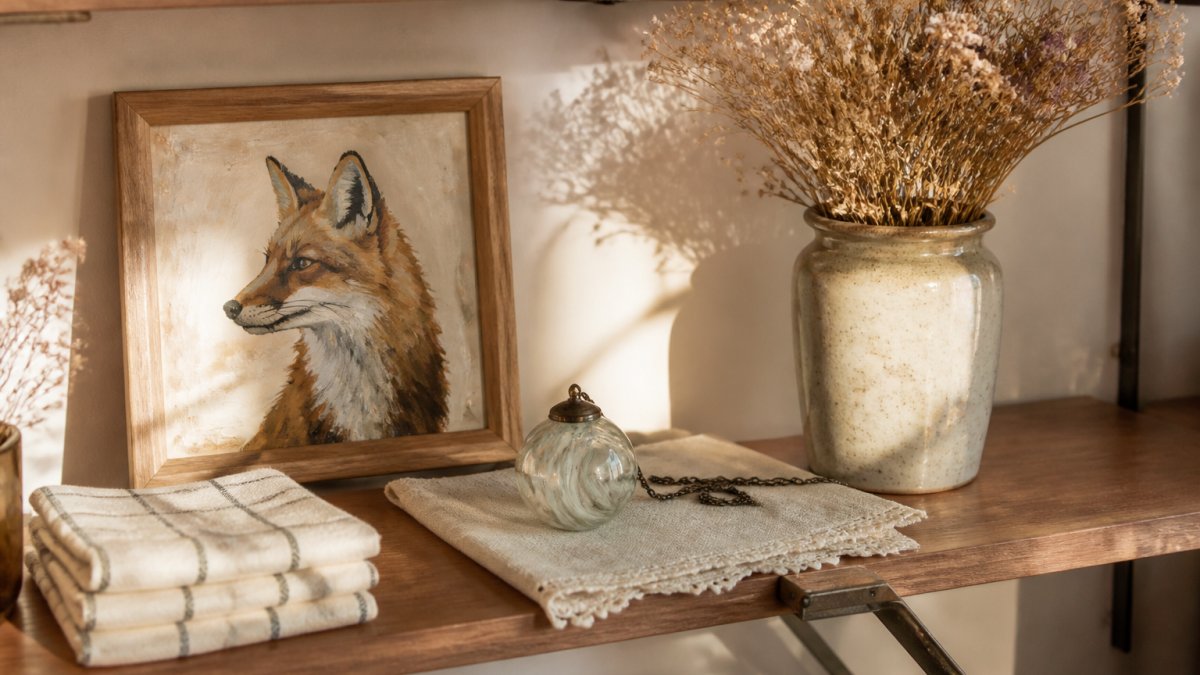
Wall Art and Painted Pieces
Small acrylic paintings are the easiest way to add handmade character without committing a whole wall. Each of these is painted by Allison Speer and priced at $26.00:
- Deer Print: a deer in acrylic, calm and quiet on a shelf or desk.
- Dunes: dunes and beach, warm and soft in tone.
- Beach: a shoreline scene that suits a bright room.
- Cow: a barnyard subject with real charm.
- Crow: dark and striking, good against a pale wall.
- Donkey: an animal portrait with personality.
- Stream: moving water, painted in acrylic.
Pros: Affordable original art, easy to group or rotate, each one unique. Cons: Small format, so they suit shelves and desks better than large walls.

Glass Jewelry and Small Keepsakes
Allison handcrafts each glass pendant in her workshop. Both are about 1 inch wide and 1.5 inches tall, each carries a scripture verse etched on the back, and each contains a spot of red glass. Because they are handmade, no two are identical, and you can request a color family when you order.
- Glass Cross Pendant, $30.00
- Abstract Glass Pendant, $20.00
Pros: Genuinely one-of-a-kind, personal, and easy to give. Cons: Color varies by nature, so expect small differences from the photo.


Kitchen and Dining Goods
The Tea Towel is $10.00, measures 24 x 24 inches, and reads "Pray Always and Drink Tea." It is cotton, it is useful, and it makes a good small gift alongside a tin of loose-leaf tea.
Pros: Inexpensive, practical, and easy to wrap as a gift. Cons: A single towel, so buy two if you want a matched pair.
Gifts and Housewarming Gifts With Real Character
The best housewarming gift is one the recipient would not buy for themselves. A $26.00 painted print, a $30.00 glass cross, or a $10.00 tea towel all clear that bar because each carries a maker's hand and a bit of story.
If you are unsure what will resonate, buy within a theme rather than guessing at taste. A kitchen gift built around tea is safe for almost anyone. A small painting suits the person who already has books and objects on every surface. And when in doubt, a handmade piece with a written note about who made it turns a nice gift into a memorable one.
Caring for Handmade Goods So They Last
Handmade goods last when you treat them like the materials they are. Keep acrylic paintings out of direct sunlight and dust them with a soft, dry cloth. Store glass pendants away from hard edges, and wipe them gently rather than scrubbing. Wash cotton tea towels in cool water and let them air dry to keep the weave and the print intact.
A little care goes a long way. The pieces you buy once and look after are the ones that stay in the family.
Handpicked artisanal home goods reward a slower approach, and finding them online does not have to mean guesswork. Gravel Switch Emporium handpicks every piece for quality and character, from acrylic paintings and handmade glass to cotton tea towels and small-batch teas, all rooted in the warmth of Kentucky's Bluegrass hills. If you want a home that feels collected rather than decorated, start with one piece you genuinely love.
Frequently Asked Questions
What should I look for when buying artisanal home goods online?
Start with the maker's story and materials. Look for listings that name the artist, describe the technique, and state dimensions, like a 24 x 24 inch cotton tea towel or a 1 x 1.5 inch glass pendant. Check whether each piece is one-of-a-kind, since handmade items vary from photos. Read the return policy before ordering, and confirm lead times for made-to-order work. Clear sourcing and honest product notes are the strongest signals of quality.
Are handmade home goods more expensive than mass-produced decor?
Usually yes, and the difference is labor. A handcrafted glass pendant at $20 to $30 reflects an artist's time in a workshop, not a factory line. Handpicked artisanal home goods also tend to be produced in small batches, so there are no bulk discounts. What you pay for is individuality, materials, and the story behind the piece. Budget-friendly options exist too, such as a $10 cotton tea towel that still carries a thoughtful design.
How do I style artisan-made pieces with decor I already own?
Mix rather than match. Pair one distinctive piece, like an acrylic animal painting, with neutral furniture and everyday objects so it stands out. Group small items such as glass pendants or a folded tea towel on a tray to create a single focal point. Repeat one color or texture from the artwork elsewhere in the room. The goal is a lived-in, layered look, not a showroom.
How can I tell whether handmade home decor is good quality?
Read the listing closely for materials, dimensions, and process. Handcrafted pieces should disclose that each one is unique, as with glass pendants that vary slightly from the photo. Look for specifics like acrylic on canvas, hand-poured glass, or 100% cotton. Ask about color requests and customization. Reviews and a clear return policy matter too, especially when you cannot see the item in person.
What are good alternatives to large home decor marketplaces?
Small curated shops that handpick every item are the strongest alternative. Instead of scrolling thousands of listings, you get a short, edited selection where each piece has a maker and a story. These unique home decor shops often carry kitchen and dining goods, small art, and gifts you will not find in big-box stores. You also get direct answers about sourcing, lead times, and returns.