 how-to
Creating a Cozy Home on Budget: 7 Easy Steps
Table of Contents
- Start with a Simple Color Scheme and Neutral Base
- How to Decorate Your Home for Free Using What You Have
- Add Texture and Warmth with Affordable Textiles
- Warm Lighting Ideas for Home That Feel Inviting
- Cozy Living Room Ideas on a Budget That Actually Work
- DIY Home Decor Projects on a Budget to Personalize Your Space
- Thrift and Source Secondhand Finds That Look Expensive
- Declutter and Organize to Reveal Your Home's Best Features
- Frequently Asked Questions
Last Updated: October 14, 2026
Start with a Simple Color Scheme and Neutral Base
A simple color scheme is the foundation of any cozy home. Neutral colors like beige, gray, cream, and soft whites create a calm backdrop that makes everything else feel intentional and warm.
Choose colors that feel personal, not generic. Warm neutrals work better than cool ones for coziness, think soft taupe instead of stark white, or warm gray instead of charcoal.
Once you have your base, stick to it. Your color choices should work together instead of competing, letting you add character through textiles, lighting, and decor without overwhelming the space.
Pick 2-3 colors maximum. One for walls, one for larger furniture, one for accents. This restraint is what makes a home feel intentional rather than cluttered.
How to Decorate Your Home for Free Using What You Have
The fastest way to create a cozy home on budget is to work with what you already own, most people have forgotten or underused items scattered throughout their home.
Walk through each room and gather pieces that feel cozy to you, even if they're not currently on display, old books, candles, blankets, plants, or artwork all count.
Rearrange what you have:
- Group books by color on shelves
- Layer throw blankets over sofas and chairs
- Cluster candles on surfaces
- Arrange plants at different heights
- Hang artwork in clusters instead of alone
This costs nothing but time. Rearranging furniture and grouping items intentionally can transform how a room feels.
Create focal points. A well-styled shelf, cozy reading corner, or mantel arrangement draws the eye and makes a room feel designed, using items you already own.
Add Texture and Warmth with Affordable Textiles
Texture makes a space feel cozy rather than cold, and textiles are the easiest way to add it affordably.
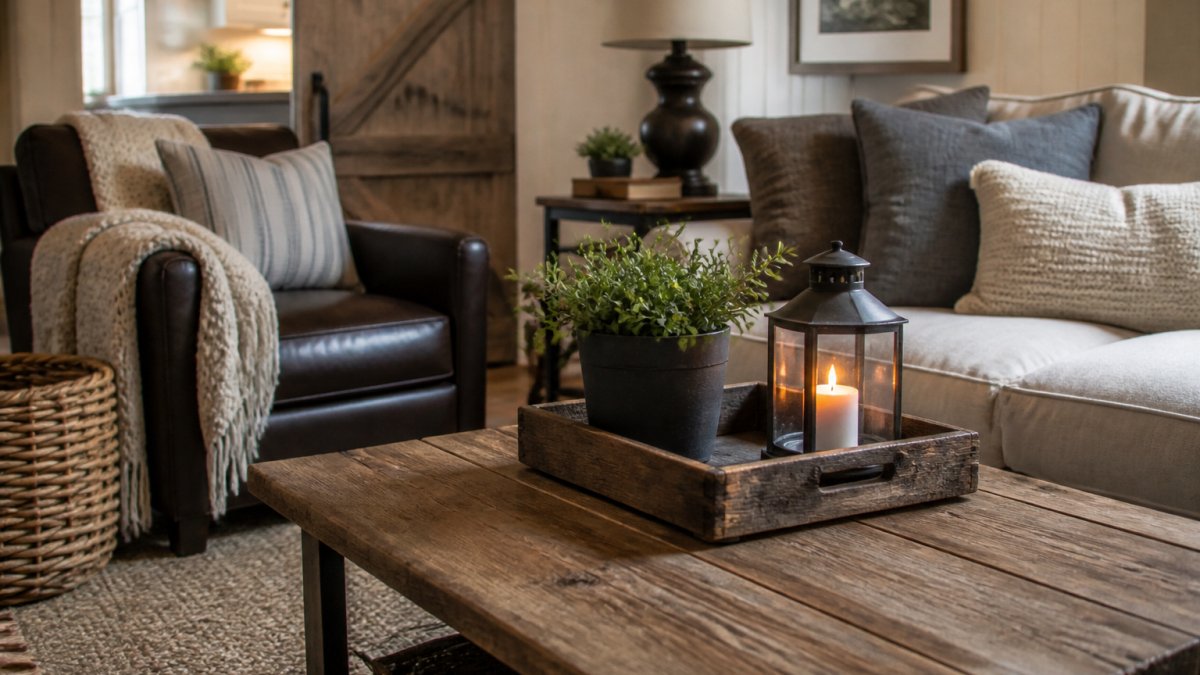
Throw pillows, blankets, rugs, and curtains add softness and warmth. Mix textures, a chunky knit blanket next to a smooth linen pillow, a wool rug under a cotton throw, for visual and tactile interest.
Affordable textile options:
- Thrift store blankets and throws
- Budget-friendly pillow covers from basic retailers
- Cotton or linen curtains in neutral tones
- Inexpensive area rugs to define spaces
- Vintage quilts or fabric pieces
Don't match everything perfectly. A cream blanket, off-white pillow, and warm beige rug create more depth than three identical items.
Layered textiles also make spaces feel softer and more comfortable, inviting you to sit down and stay awhile.
Warm Lighting Ideas for Home That Feel Inviting
Lighting is the difference between cozy and institutional. Harsh overhead lights flatten a room; warm, layered lighting brings it to life.
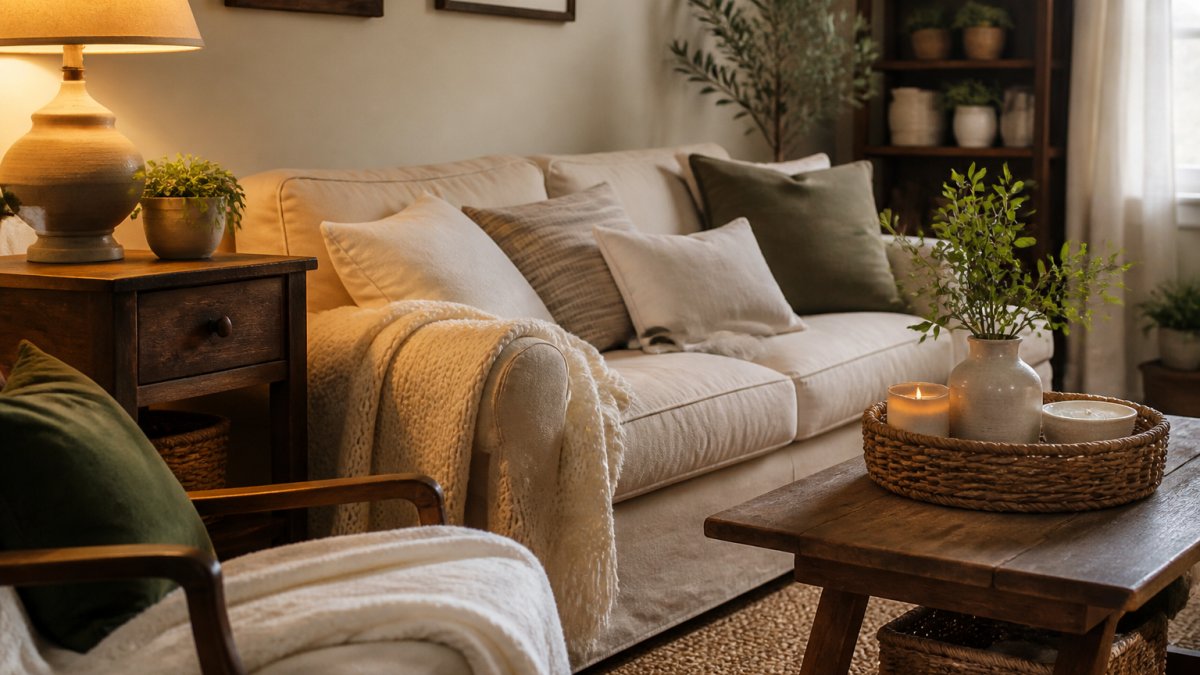
The goal is multiple light sources at different levels, layering, one of the most effective ways to make a home feel inviting.
Types of warm lighting to layer:
- Ambient lighting (soft overhead or wall sconces)
- Task lighting (table lamps, reading lights)
- Accent lighting (candles, string lights)
- Natural light (windows, skylights during the day)
Warm lighting means soft, yellowish tones rather than bright white or blue. Look for bulbs labeled 2700K or lower on the color temperature scale (Understanding LED Color-Tunable Products).
Candles are one of the cheapest ways to add warm light. Place them on shelves, tables, and mantels, even unlit, they add visual warmth.
Wall sconces are another affordable option, providing ambient light without taking up table space and looking more finished than lamps alone.
Cozy Living Room Ideas on a Budget That Actually Work
Your living room is where coziness matters most and where a budget gets tested hardest.
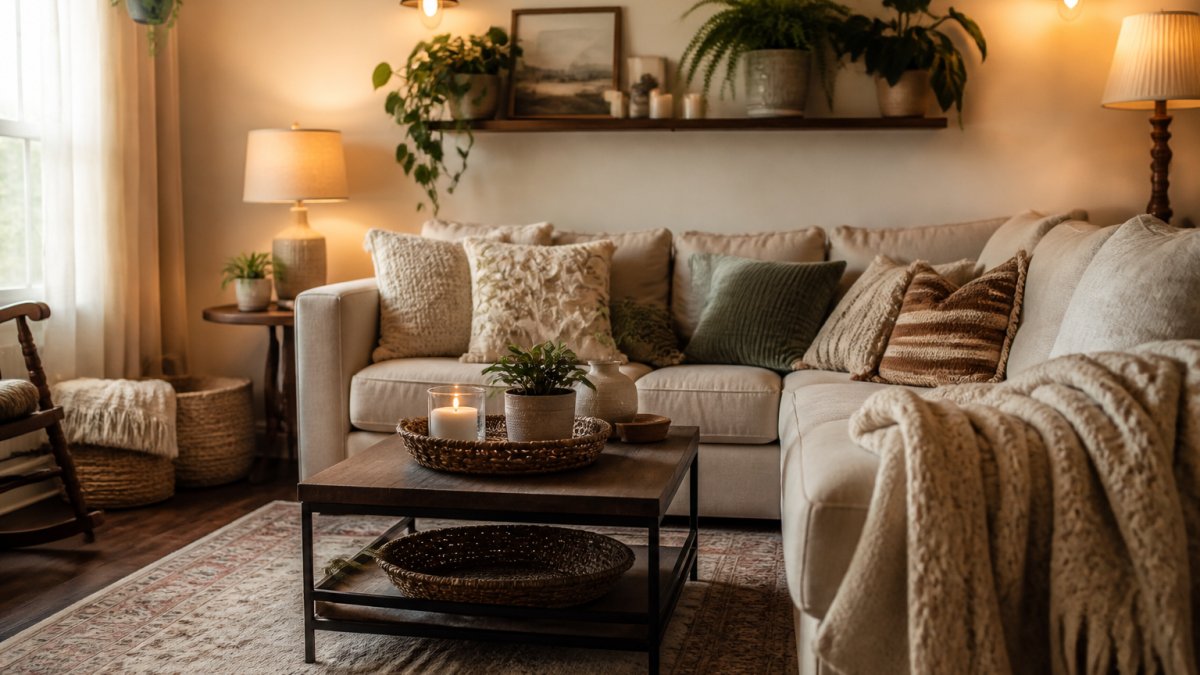
Step 1, Anchor the seating (the one place worth spending). A comfortable sofa or chair is the foundation.
Step 2, Define the floor with one rug. A rug makes a seating arrangement read as a room instead of floating furniture.
Step 4, Add textiles last. Two throw pillows per seat, mixed in size (a 20-inch and an 18-inch insert read better than two identical squares).
Create zones within the room:
- A reading corner with a chair, lamp, and small side table
- A conversation area with seating facing each other rather than the TV
- A display area for plants, books, or meaningful objects
A realistic starter budget for one living room:
- Slipcover or used sofa refresh: $0-$120
- 8x10 washable rug: $60-$150
- Two lamps plus bulbs: $40-$100
- Four pillow covers plus two throws: $40-$80
- One large plant plus a basket or pot: $25-$60
Add natural elements like plants and wood, shelves, frames, a thrifted side table, to warm up a space.
DIY Home Decor Projects on a Budget to Personalize Your Space
Most DIY lists assume you own a drill and can put holes in the wall, leaving out renters and first apartments. The projects below are sorted by how reversible they are, so you can pick ones that fit your lease and tool drawer.
Fully reversible (no holes, no paint):
- Peel-and-stick wallpaper on one accent wall. A single roll typically covers about 28 square feet; a standard accent wall often needs three to five rolls. Cost usually runs $25-$60 per roll. Clean the wall first and press edges firmly, the most common failure is corners lifting in humidity.
- Removable adhesive hooks and strips for gallery walls. Weight ratings are printed on the package; stay well under the limit and avoid hanging anything over glass or near heat.
- Slipcovers and pillow covers to change a color scheme without touching furniture.
- Plug-in sconces and cord covers to add layered light without an electrician.
- Renter-friendly curtain rods that tension-mount inside a window frame.
Low-commitment (small holes, easy to patch):
- Floating shelves. A basic bracket-and-board shelf needs a drill, a level, and wall anchors. Pre-finished boards and brackets often total $20-$40 per shelf. Anchors matter, drywall alone will not hold a shelf loaded with books.
- Gallery wall with frames you already own. Free if you reuse frames; spray paint in a single color unifies mismatched ones for about $8-$12 a can.
- Refinishing small furniture. Chalk-style paint and a wax or topcoat can revive a thrifted side table in an afternoon. Sanding is often optional with chalk-style paint, which is why it is the beginner-friendly choice.
Higher effort, higher payoff:
- Painting an accent wall. A gallon of interior paint generally covers about 350-400 square feet, so one accent wall usually takes a single gallon plus primer and tape. Choose your neutral base color and commit to it.
- Building simple built-ins. This is the project most likely to require a second person and a stud finder. If that is more than you want, freestanding bookcases pushed together and trimmed out read as built-ins from across the room.
A note on tools. Many hardware stores and neighborhood tool-lending libraries let you borrow a drill, level, and stud finder rather than buying them, usually the better trade for a one-time project.
At Gravel Switch Emporium, we believe that personalizing your space with thoughtful touches, whether handpicked decor or DIY updates, is what transforms a house into a home you love. Small, intentional choices matter more than expensive renovations.
Thrift and Source Secondhand Finds That Look Expensive
Thrifting is the secret to creating a cozy home on budget without looking budget-conscious.
Quality vintage pieces elevate a space, a well-made wooden side table often looks better than a new particle-board version, and vintage textiles have texture and patina new items lack.
Where to thrift:
- Local thrift stores and charity shops
- Estate sales and auctions
- Online secondhand marketplaces
- Antique malls and vintage shops
- Neighborhood buy-and-sell groups
Look for solid construction and items that fit your color scheme. A vintage lamp with a worn brass base and linen shade feels more curated than a mass-produced version.
Mix thrifted pieces with new basics, a vintage wooden dresser with simple white bedding, or an old mirror above a new console.
Don't worry if pieces aren't perfect, imperfections add character. A worn wooden frame, faded vintage quilt, or mismatched glasses all make a space feel lived-in and genuine.
Declutter and Organize to Reveal Your Home's Best Features
Start small: one shelf, drawer, or corner. Keep what you use and love, donate or sell the rest. This reveals what you value and makes room for intentional curation.
Decluttering approach:
- Remove items you don't use or love
- Organize what remains into logical groups
- Create storage solutions for daily items
- Keep surfaces clear except for meaningful pieces
- Return items to their homes after use
Organization creates calm. When items have designated places, a room feels ordered rather than chaotic, allowing cozy elements like textiles, lighting, and plants to shine.
A decluttered space also feels larger. Even small rooms feel open and inviting when they're not packed with stuff.
Once clutter is cleared, you'll see your home's actual features, architectural details, good bones, natural light, existing decor, the elements you build your cozy home around.
Creating a cozy home on budget is about making intentional choices rather than spending money.
Frequently Asked Questions
How can I make my home feel cozy on a budget?
Start by decluttering and organizing your existing space, then layer in affordable textiles like throw pillows and blankets. Add warm lighting through multiple light sources, incorporate natural elements like plants and wood accents, and use a simple neutral color palette as your base. Thrifting for secondhand finds and DIY projects let you personalize your space without spending much. The key is working with what you have first, then adding affordable updates that build warmth and character.
What colors make a home feel warm and inviting?
Neutral colors like warm whites, soft beiges, taupe, and pale grays create a timeless base that feels both calm and welcoming. Layer in warm accent colors such as terracotta, soft rust, warm browns, and muted golds through textiles, art, and decorative accents. Avoid cool grays or stark whites, which can feel cold. The goal is a color palette that feels like a warm embrace, think of the tones you'd find in natural materials like wood, linen, and clay.
What's the cheapest way to add lighting to make a room feel cozier?
Use multiple light sources at different levels rather than relying on one overhead fixture. Table lamps with warm bulbs, floor lamps, and battery-operated candles are affordable ways to create ambient lighting. Thrift stores often have inexpensive lamps and shades. Swap out harsh white bulbs for warm white or soft white options (2700K color temperature). Layering these alternate light sources costs far less than expensive fixtures but creates the inviting, layered glow that makes a space feel genuinely cozy.
Can I create a cozy home if I rent or can't make permanent changes?
Yes. Rental-friendly improvements focus on reversible changes: removable wall adhesive strips for art and shelves, temporary peel-and-stick wallpaper, throw pillows, blankets, rugs, and lighting. Paint is often allowed if you repaint before moving. Focus on styling your existing furniture with textiles, adding plants, and using lighting to transform the space. These changes cost little and move with you, making them ideal for renters or anyone wanting flexibility.